Affecting Change
Below is a list of motions I have made to date to address some of the concerns I have heard and ideas I have had to make Edmonton an even better place to live.

Flowers - wild and free
What if people could go out and plant wildflowers from seeds provided by the City?
It would make our city beautiful, give us a sense of pride and help build community. And that’s why on Sept. 1, 2026, I made the following motion.
That Administration provides a report to the Committee outlining resources and considerations for engagement with potential partners and environmental groups, development, delivery and promotion of a community wildflower program, including enhanced participant recognition and site mapping, and alignment with existing park and open space volunteer and stewardship programs.
Funding playgrounds
Three playgrounds in Edmonton had been struggling to raise money for playgrounds as part of the City’s Neighbourhood Park Development Program — which was coming to an end — so I made a motion to fund the remaining portion.
That capital profiles CM-36-0000 - Open Space: Partner Renewal (NDPD Renewal) and CM-36-3636 - Neighbourhood Park Development Program - New be used to fund the remaining community contribution funding needed for playground development and redevelopment in Hairsine and Kensington parks and a pocket park in Belvedere with funding from the existing profiles to allow for completion of the projects and full sunsetting of the Neighbourhood Park Development Program (NPDP).
Edmonton Autonomy
On May 27, 2026, I made a motion driven by one primary concern: fiduciary and social duty to the people of Edmonton.
You can read all about this in my blog post here.
That Administration prepare and return to Council a report examining options for strengthening Edmonton’s constitutional, legislative, and fiscal independence, including but not limited to:
• Existing and emerging legal pathways toward greater municipal autonomy, including mechanisms available under the Constitution Act, 1982, federal legislation, and applicable case law;
• Mechanisms to protect Edmonton's economy should Alberta elect to separate from Canada, including different structural models to allow Edmonton to stay a part of Canada.
• Opportunities for direct federal-municipal fiscal arrangements that reduce Edmonton’s structural dependence on provincial transfers;
• The role of Treaty 6 and Enoch Cree Nation partnerships in strengthening Edmonton’s jurisdictional position within the Canadian federation;
• Options for coordinated advocacy with other major Canadian municipalities toward a new national framework for urban constitutional recognition;
• An assessment of what a renewed or entrenched City Charter framework would require to be legally durable, in contrast to existing charter arrangements that remain subject to unilateral provincial amendment.
Traffic safety measures on Hermitage Rd./40 St.
My motion to reevaluate the traffic safety measures on Hermitage Road and 40 Street passed on July 2, 2026
I gave City Admin a year and a half, during which we monitored how this infrastructure fared in different seasons. This was important as I was able to show my colleagues that the safety measures were not working well for the community and needed to be reconsidered.
That Administration provide a report with options, timelines, and financial implications to modify the adaptable traffic calming infrastructure along Hermitage Road and 40 Street, including the following:
1 Design and Traffic Flow Modifications
a: Options to adjust the physical footprint of current measures to alleviate unintended traffic bottlenecks. Some considerations could include bike lane implementation in only one side of Hermitage Road and 40 Street.
2 Maintenance and Operations
a: Strategies to improve the efficiency and efficacy of winter road maintenance including potential windrow management.
b: Cost and benefit considerations for seasonal maintenance cycles, including mitigating damage to infrastructure and accommodating spring clean-up operations (e.g., street sweeping), etc.
3 Preservation of Safety Benefits
a: An analysis of how potential design modifications will preserve the intended pedestrian safety, active transportation access, and speed reduction benefits of the Towards 40 program.
E-scooter Parking
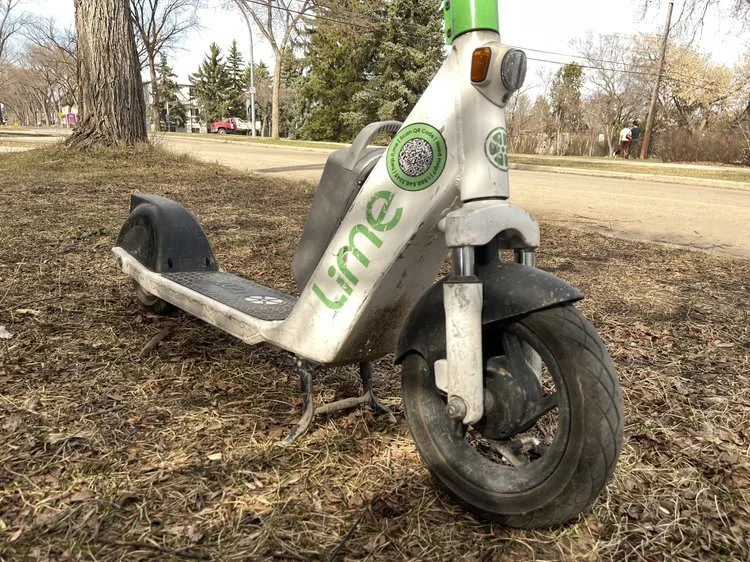
I heard from a lot of residents, especially those with disabilities and mobility concerns, about e-bikes and e-scooters blocking sidewalks.
These companies have the ability to use geo-location to create parking spots for e-scooters and e-bikes. Which is why in May 2026, I made a motion to compel these companies to use these systems to create stricter parking systems for e-scooters and e-bikes.
I hope this will lead to organized parking for these devices.
That Administration provide a report to Committee on transitioning shared micro-mobility devices (e-scooters and e-bikes) to a mandatory, geo-fenced parking model, outlining:
1. Mechanisms to mandate vendor-enforced parking compliance through future License Agreements;
2. A process for collaborating with licensed vendors to identify suitable designated parking zones within the right-of-way; and
3. Any minimal municipal infrastructure requirements and a brief jurisdictional scan of similar, successful models.
Parking Enforcement
To address the parking concerns in our neighbourhoods, especially during parking bans. I have asked the City to look at all options to increase parking enforcement in our neighbourhoods.
That Administration provide a report to Committee that details a strategic plan for parking enforcement, specifically providing:
1. A quantified assessment of current service demands and projected growth
2. The operational requirements necessary to expand parking enforcement;
3. Specific, actionable recommendations to execute program efficiencies and improve service delivery; and
4. The precise budget implications and funding requirements needed to implement these recommendations.
Footbridge over Manning Drive
Building a footbridge across Manning Drive — connecting the 160 Avenue multi-use path — would connect pedestrians in growing neighbourhoods nearby to the shops and amenities at Manning Town Centre.
It's almost impossible to get across this sort of river of cars in a safe way without jaywalking as the closest crosswalk is on 153rd Avenue.
1 That Administration prepare an unfunded service package for consideration as part of the 2027-2030 operating budget to complete a feasibility study for a multi-use trail over Manning Drive (connecting the 160 Avenue multi-use path to Manning Town Centre and the future Gorman bridge).
2 That Administration provide a memo outlining:
A: Potential funding sources for a feasibility study for a pedestrian footbridge over Manning Drive (connecting the 160 Avenue multi-use path to Manning Town Centre and the future Gorman bridge), including potential strategies such as municipal reserve allocations, developer contributions, and active developer participation.
B: A high-level analysis identifying other areas in the city where similar major active transportation connections are needed.
Unprecedented snowfall strategy
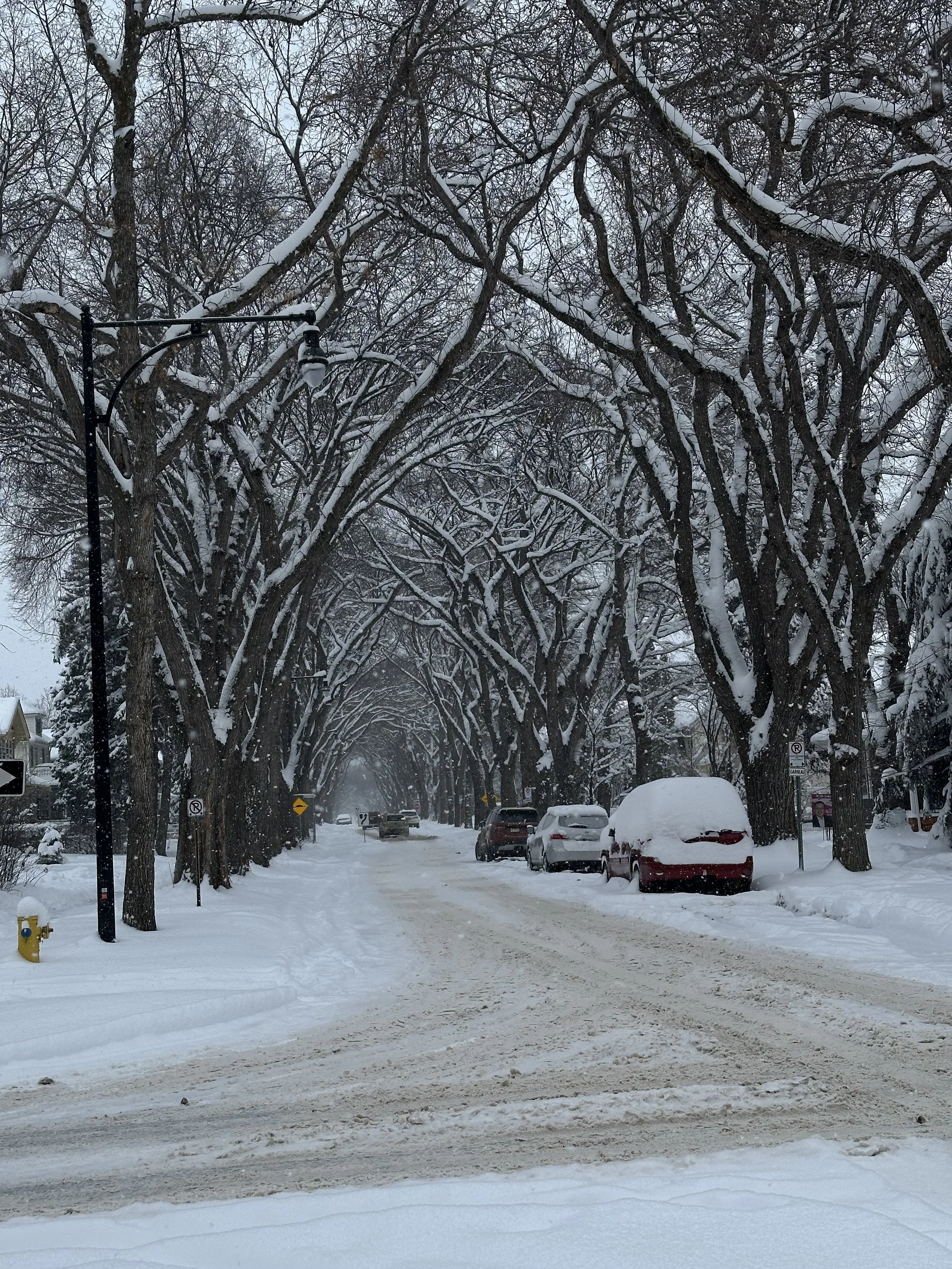
The unprecedented snowfall we received in December 2025 and January 2026 made me realize we need a strategy to better equip the City of Edmonton for future events.
This could be setting up a surge response for potential future events, work with the private contractor ecosphere to develop agreements that put Edmonton on a more secure footing going forward as far as being able to access additional service in a timely fashion, and ensure that folks with mobility challenges can still get around when the going gets tough in winter.
That Administration provide a report, based on public feedback and industry best practices, outlining options, costs, and implications for a Snow and Ice Control "Surge Capacity" strategy to ensure timely service delivery during unexpected or extreme precipitation events, including:
1. An operational analysis of projected extreme weather frequency based on current climate modeling and climate data; and
2. Mechanisms to scale resources, including but not limited to retainers for on-call private contracting and emergency procurement, to meet Service Levels outlined in the SNIC Administrative Procedures when accumulation exceeds City-owned and standard contract capacity.
3. Specific strategies to prioritize accessibility with consideration of the active pathway network in areas of high Social Vulnerability Index during these surge events, including but not limited to more proactive crosswalk and access point windrow removal and clearing; and
4. Any other strategies or enhancements that could improve service delivery.