Ice, Ice, Maybe? (The Cost of Certainty)
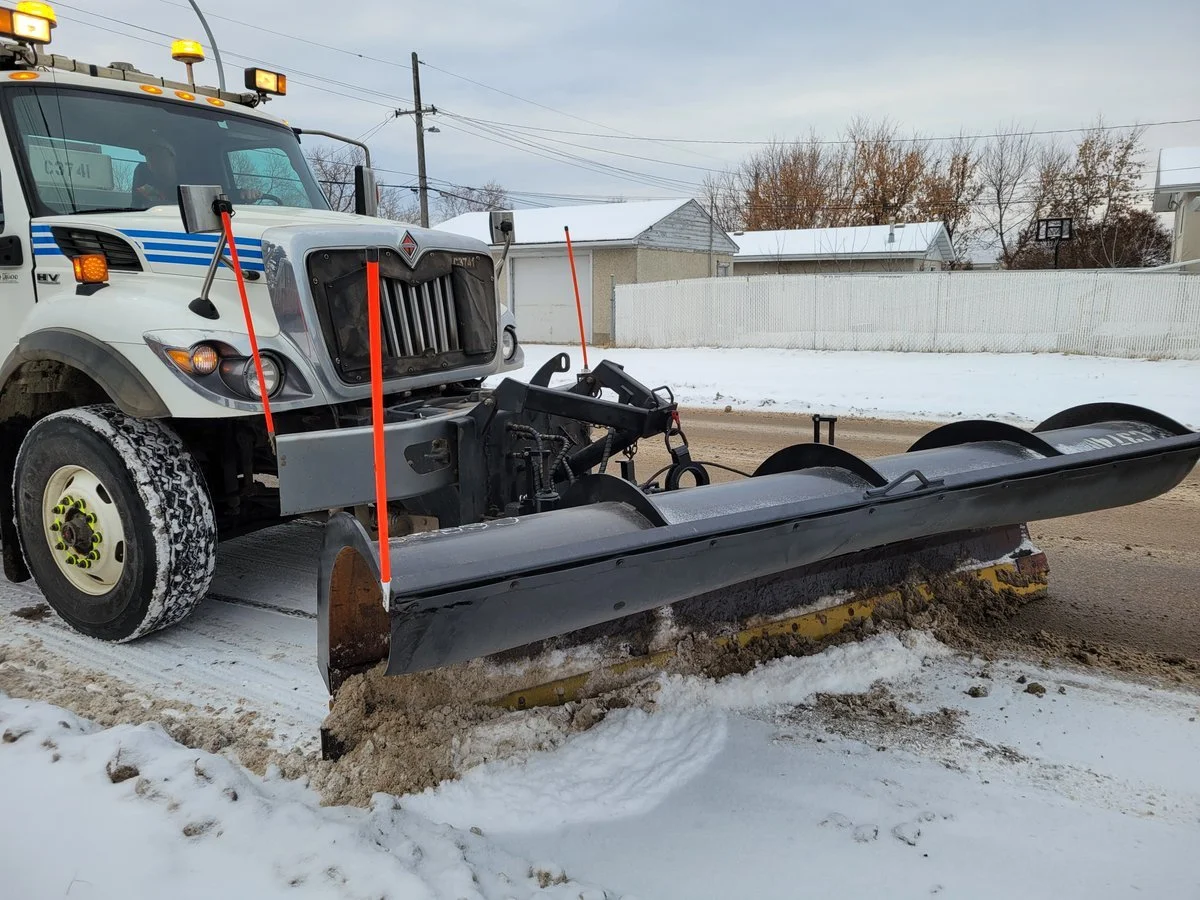
Picture of a City of Edmonton Snow Plow
Sisyphus on Fort Road
In Greek mythology, Sisyphus was punished by Zeus to roll a boulder up a hill, only to watch it roll back down every time he neared the top.
Lately, that is pretty much how it felt to clear - or drive - Edmonton’s streets.
Imagine the operator on Fort Road. They drive the route while the blade scrapes the ice. It can be tense, especially while the heavy snowfall is obscuring vision. But by the time they turn around for the return leg, the snow has already filled in behind them.
The work never feels "done." It always feels like it is “perpetually going.”
If you are white-knuckling your way to work, or bouncing through ruts on your residential street, you are pushing that boulder too.
This is not your imagination!
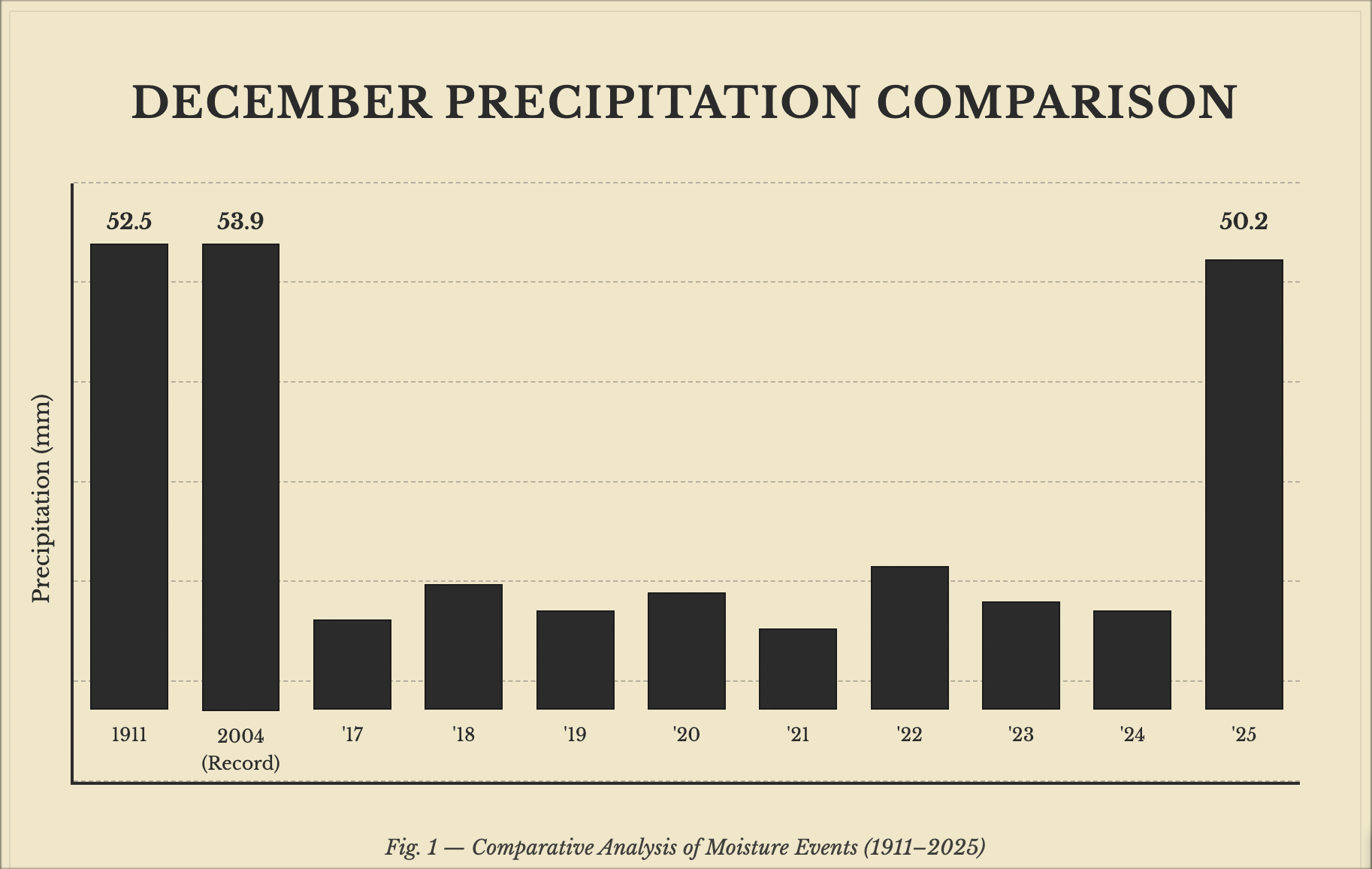
In December 2025, we saw 70 cm of snow dropped on our city. The last time we saw a December like this was 2004. Before that? You have to go back to 1911.
We are fighting a 100-year winter with a standard-issue budget.
The Shrinkflation of Service
You’ve seen it (felt it!) at the grocery store: the bag of chips costs the same, but there are fewer chips inside.
That is exactly what happened to our city services.
Here’s what I call the Terrible Irony. For years, starting with Covid, to keep taxes as low as possible, budgets were constrained (believe it or not). But inflation didn't stop.
By keeping the budget lower than inflation + population growth while costs soared, the city’s purchasing power shrank. We bought a smaller bag of chips every year.
1. Your taxes went up (because things still need to be paid for and prices went up).
2. Your services went down (because the money bought less).
Taxes Up ⬆️
Services Down ⬇️
That’s the math.
And the irony. Successive Council’s tried to keep taxes low while still trying to cover needs, but what ended up happening is that meant cuts in services so you are correct in feeling like you are paying more for less. YOU ARE. But the ‘more’ you pay is less than the old level of service. Unless things change, it becomes a no-win scenario.
The result? This approach has left us with a snow program that can handle an average winter, but buckles under a historic one. To be fair, even robustly funded Snow and Ice Control budgets would have a tough time keeping up to the past 6 weeks or so.
Stop Guessing. Start Building.
We CAN fix this.
We can have bare pavement in cul-de-sacs. We can haul away every windrow. The technology exists and the crews are ready.
The only question is: Are we willing to buy the bigger bag?
I don’t want you to take my word for it. I want you to see the trade-offs yourself.
I have created a Snow & Ice Budget Builder. It is a tool that lets you set the service level.
Want windrows gone? Click the slider.
Want "Cadillac service" clearing? Select it.
It’s your money, your choices, and ultimately YOUR POLICY.
Watch the tax impact number change. It can seem overwhelming, seeing the receipts, but seeing the tax implications can empower you and give you more information and more access to how your city works.
Go to AaronPaquette.ca/snow-ice to try the simulator.
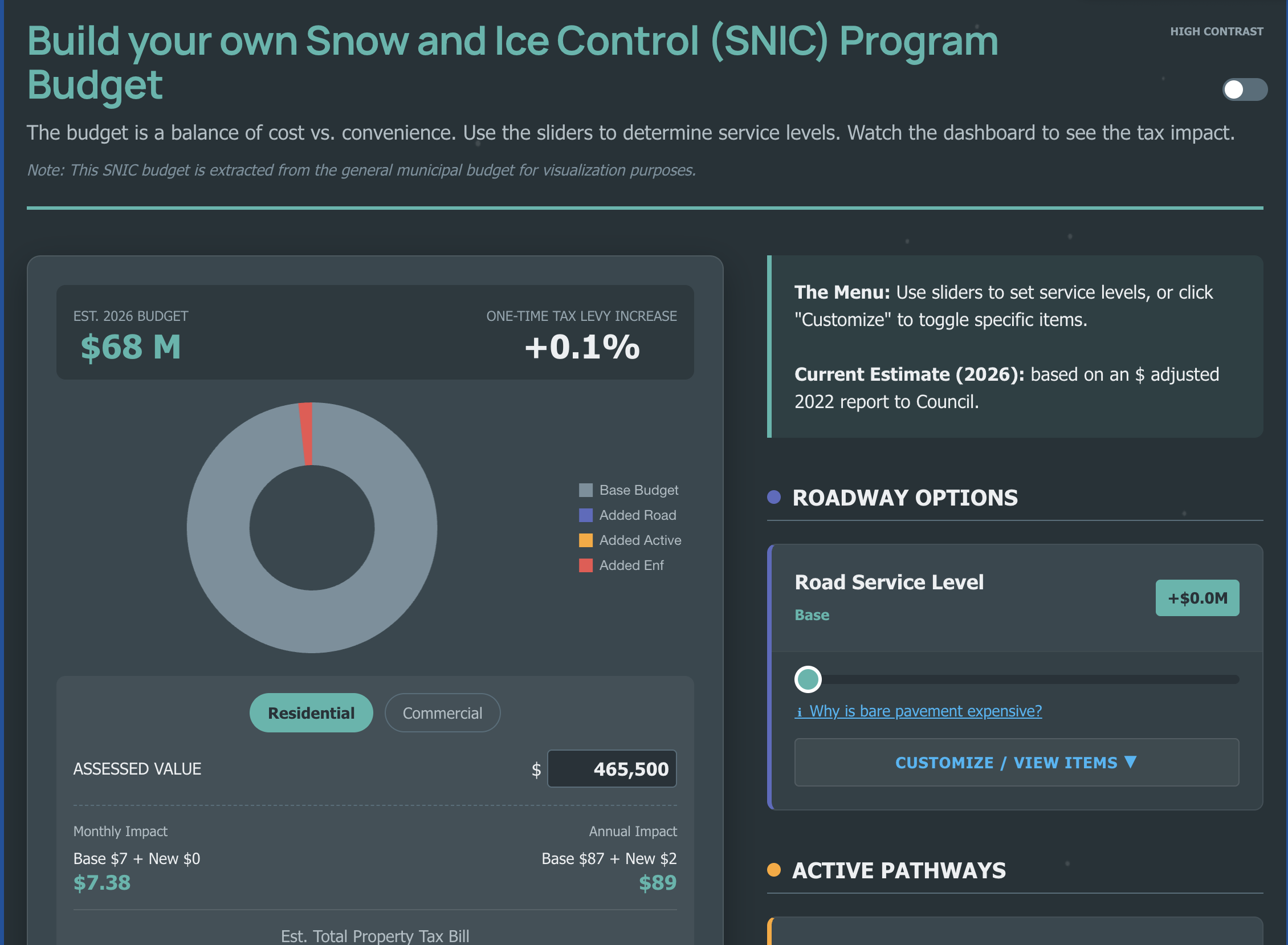
If you try it out, send me your results (email button built right in to make it easy)
Long time watchers of Council will know that I have been a consistent advocate for better Annie and Ice Service. And pushing back on even deeper cuts to the service - while not always popular - is something I felt was important to do. Perhaps now there will be a re-think in some of these areas of the program.
The Bottom Line
You should know that Edmonton’s books are independently verified as some of the best in North America (winning the Distinguished Budget Presentation Award for 22 years running).
The numbers in the simulator are real. The costs are real.
The conversation is happening in every driveway in Edmonton. Now, let’s bring it to the budget.
Check out the tool and weigh the costs for yourself.
What is the right balance for you?
This is a conversation we will be having in EVERY area of service delivery in the coming year, might as well start here!
Time to stop, collaborate, and listen.
-
below: a chart that shows the last 3 major snowfalls in 1911, 2004, and the recent 2025/2026 event.